

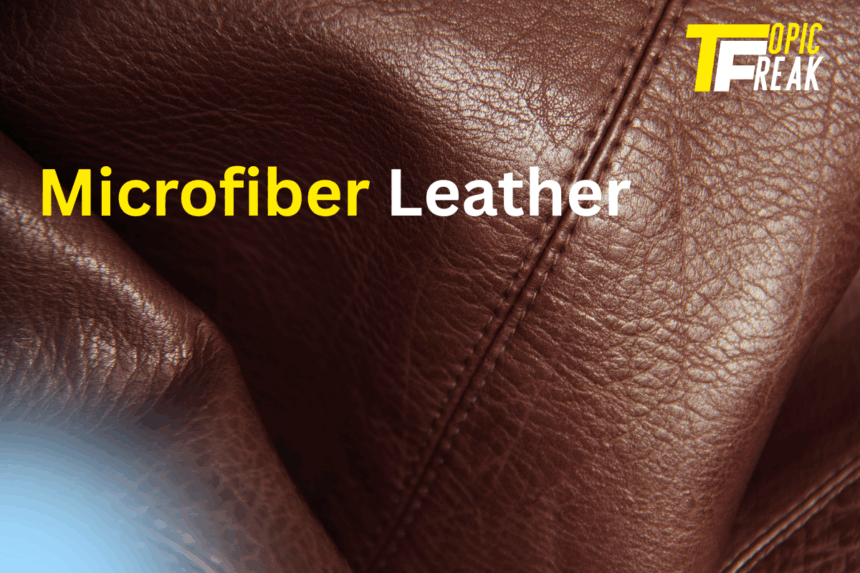
Microfiber leather, a cutting-edge development in the leather industry, is a testament to the strides made in material science. Known by various names such as synthetic leather or vegan leather, this high-performance leather alternative is a game-changer that alleviates environmental and ethical concerns.
What Is Microfiber Leather?
Microfiber leather, at its core, is an artificial material that attempts to replicate the appearance and tactile experience of leather. The microfiber material gets mixed with a polyurethane (PU) resin to create it. This creates a composite material that not only looks and feels like natural leather, but is also stronger and more durable in most cases.
Unlike regular PU leather, which is usually manufactured by laying a piece of fabric on a polyurethane coating, microfiber versions follow a more complex procedure that knits together microfibers into a three-dimensional kind of structure. The technique makes the product stronger and well-ventilated.
Advantages Of Microfiber Leather
These are the main pros of microfiber leather, well-presented and outlined:
1. High Durability
Microfiber leather, with its exceptional wear-resistance, stands out for its durability. Unlike natural leather, it doesn’t crack, peel, or lose its shape easily, making it a reliable choice for high-traffic areas like car seats, furniture, and footwear.
2. Stain and Water Repellency
With its tight fiber and PU coating, it can resist moisture and stains better than genuine leather. This makes it low-maintenance and ideal for having around kids or pets.
3. Breathability
Microfiber leather can be breathable despite being an artificial material. The 3D woven microfiber foundation allows air to flow freely, making it comfortable in various items like shoes, clothing, and upholstery.
4. Eco-Friendly Option
Microfiber production does not involve the harmful chemicals and does not consume a lot of water compared to traditional methods of leather tanning. It is more environmentally friendly leather, particularly when produced through clean production.
5. Animal-Free (Vegan-Friendly)
Microfiber leather is free of animal products in its manufacture, and therefore it stands among the most preferred materials by individuals who want alternatives to vegan leather. It gives a cruelty-free answer without compromising on beauty or quality.
6. Strong But Lightweight
It has a high strength-to-weight ratio. This makes it convenient to use in production and easier to handle by the consumer, especially in the production of materials such as bags, jackets, and car interiors.
7. Consistent Appearance
Contrary to natural leather, where blemishes or uneven grain may occur, there are no blemishes or variations in grain in microfiber leather. This helps the manufacturers who require a smooth and repeatable finish.
8. Cost-Effective
Microfiber leather, while more expensive than some alternatives, offers a high level of performance that justifies its cost. It brings luxury aesthetics into a more affordable price range, making it a wise choice for brands and consumers alike.
What’s The Difference Between Microfiber And Other Leathers
We need to understand its peculiarities by contrasting it with other cottage industry products, in this case, genuine leather, polyurethane (PU) leather, and bonded leather, considering the following parameters: material composition, mechanical performance, sustainability, and economic aspects.
1. Microfiber Leather and Genuine Leather
Genuine leather is made out of animal skin, which has usually gone through a process of tanning, dyeing, and finishing. It is characterized by its grain, flaws, and the tendency to take a patina as age occurs. By comparison, microfiber leather is made of a non-animal product containing ultrafine microfibers embedded in a polyurethane (PU) framework. This is set out in a three-dimensional woven structure that replicates the collagen fiber structure as it would exist in natural hide.
2. Microfiber Leather and PU Leather
Another form of synthetic leather is PU leather, which is usually a thin fabric base with a layer of polyurethane applied to it. Although PU leather has similarities with microfiber in terms of the surface, the structure varies significantly. PU leather typically has a knitted or woven substrate, which gives it little structural support. An example of this difference is that, unlike microfiber leather, which has a more microstructure resembling a natural hide, it is more resilient, flexible, and lasts longer.
3. Microfiber Leather Vs Bonded Leather
Bonded leather is made from reconstituted scraps and fibers of the leather, bonded with an adhesive, and then coated with either polyurethane or latex. Despite the presence of a percentage of actual leather material, bonded leather is not as strong, flexible, and durable as genuine leather and microfiber leather.
Microfiber leather, on the other hand, is always even in performance since it is made out of an engineered fiber network.
Why do I Need Microfiber Leather?
Microfiber leather is an intelligent compromise between authentic and conventional synthetic leathers, offering better durability, ease of maintenance, and a similar appearance to leather, all without using animal products. It is waterproof and stain-proof, more breathable than PU leather, and it retains its shape and feel throughout its life. Compared to genuine leather, it is even more affordable and less environmentally expensive to create, thus being a matter of interest to both budget-conscious and environment-conscious consumers with a focus on a variety of activities, starting with fashion and ending with automotive settings.
Is Microfiber Vegan?
Yes, microfiber leather can be considered vegan since the material used is entirely synthetic and does not contain any animal products whatsoever. It is prepared from polyester or nylon super-fine fibers blended with polyurethane (PU), making it a material similar to genuine leather.
It is, however, important to mention that the product is not entirely biodegradable, although it is animal-free and petroleum-based. This, however, depends on how it is manufactured. To achieve better sustainability, some manufacturers are now coming up with eco-friendly or partly bio-based products.
Cost of Microfiber Leather
Prices for microfiber leather can also vary according to quality, thickness, and use, but typically range:
- Mid-range to high-quality microfiber leather: US 4-8 dollars per meter (or yard)
- Good quality microfiber leather (consisting of automotive/furniture grade material): $10-20+ per meter
- Prices can also vary based on the coatings (matte, glossy, anti-scratch), the materials used behind the print (backing material), and the customization of the color.
Best Local Products that use Microfiber Leather
Microfiber leathers have a wide range of applications in industries where durability and aesthetics are key considerations. Some of the common products derived from it are:
- Car Interiors
- Upholstering, dashboard trimming, door covering, and steering wheel covers
- Furniture
- sofas, chairs, headboards
- Footwear
- Sports, boots, formal shoes
- Bags & Accessories
- Handbags, wallets, belts, backpacks, watch straps
- Apparel
- Jacket, gloves, Hats
- Electronics Cases
- Tablet and phone sleeves, and laptop covers
- Sports Goods
- Boxing gloves, football, gym equipment coverings
- Aviation and Q Marine Upholstery
- Seats, panels, trims
- Uses Across Industries
Fashion is not the only sphere where microfiber leather can be used. It is finding uses in auto design, sports gear, and even interior design in aircraft. It is light and has high tensile strength, making it a good choice for applications that require both good looks and functionality.
As an example, in the furniture industry, microfiber material is a trendy and handy choice because it is easily washable and clean to the touch. On the same note, expensive sneaker brands are incorporating microfiber components into their designs to enhance durability.
How To Recognize Microfiber?
Microfiber leather is smooth and consistent in texture and does not have any of the natural flaws of genuine leather on its surface. It usually is softer, fabric-based, and not fibrous like suede on the underside. Unlike genuine leather, which absorbs water at high speed, this material allows water to form beads on its surface. It is also not heavy in terms of the smell of natural leather, and it has a mild or synthetic smell. The microfiber leather is less susceptible to scratches and wear, and the color and the grain pattern are very uniform most of the time. Also, it is always advisable to scan the label or product description because it is commonly referred to as microfiber synthetic leather or vegan leather.
Limitations
Although microfiber materials may seem to have a lot of advantages, there are disadvantages to them as well. They are petroleum products, implying that their manufacture continues to depend on fossil fuel. Also, they cannot be biodegradable in all variants, which raises concerns about waste management on a long-term basis.
Still in development are efforts to come up with biodegradable PU leather as well as recycled material in microfiber production. Such inventions are made to make the ecological footprint even smaller.
Final Thoughts
As the market for sustainable and ethical products continues to grow, microfiber leather can be regarded as an excellent replacement for traditional leather. It can combine qualities of utility, beauty, and environmentally responsible production into a single material. This material represents the new generation, catering to both designers seeking consistency in quality and consumers looking for products made without animal products.
Read More
Cyber Sigilism Tattoos Explained: From Origins to Modern Placement Trends
Why Chronic Care Management Is So Important in Modern Healthcare?
The Bold and the Beautiful: 2025 Hair Colors Trends
Frequently Asked Questions (FAQs)
1. What is microfiber leather?
Microfiber leather is a synthetic fabric composed of very fine microfibers and polyurethane, designed to mimic the appearance and feel of genuine leather.
2. Does microfiber leather exist?
It is an artificial material and it does not have any animal hide.
3. Is microfiber leather taking the place of genuine leather, but is it vegan?
Yes, it is completely animal-free and considered a vegan alternative to synthetic leather.
4. How long is microfiber leather durable?
It’s very robust and durable, and non-fading, non-cracking, lasts most commonly longer than PU or bonded leather.
5. Where is microfiber leather used?
It is used in cars, shoes, and handbags. It is used in car seats, car decorations, furniture, shoes, bags, and sports equipment.
6. Is it easy to maintain microfiber leather?
Yes, it is water-repellent, easily removable, and cleanable with a damp cloth.
7. What is the price of microfiber leather?
The cost is usually between $4 and $20 per meter, taking into account both quality and utilisation.


